

On Wednesday 11 November, thirty-seven international students from four universities walked into Room 0.02 of the Sir Bob Burgess Building at the University of Leicester. By the end of the afternoon, they were talking to each other, swapping contacts and asking the kind of questions you only ask when you feel safe enough to admit you do not have all the answers.
That is what we set out to create. A room where international students could hear honestly about what it takes to move from studying in the UK to working here.
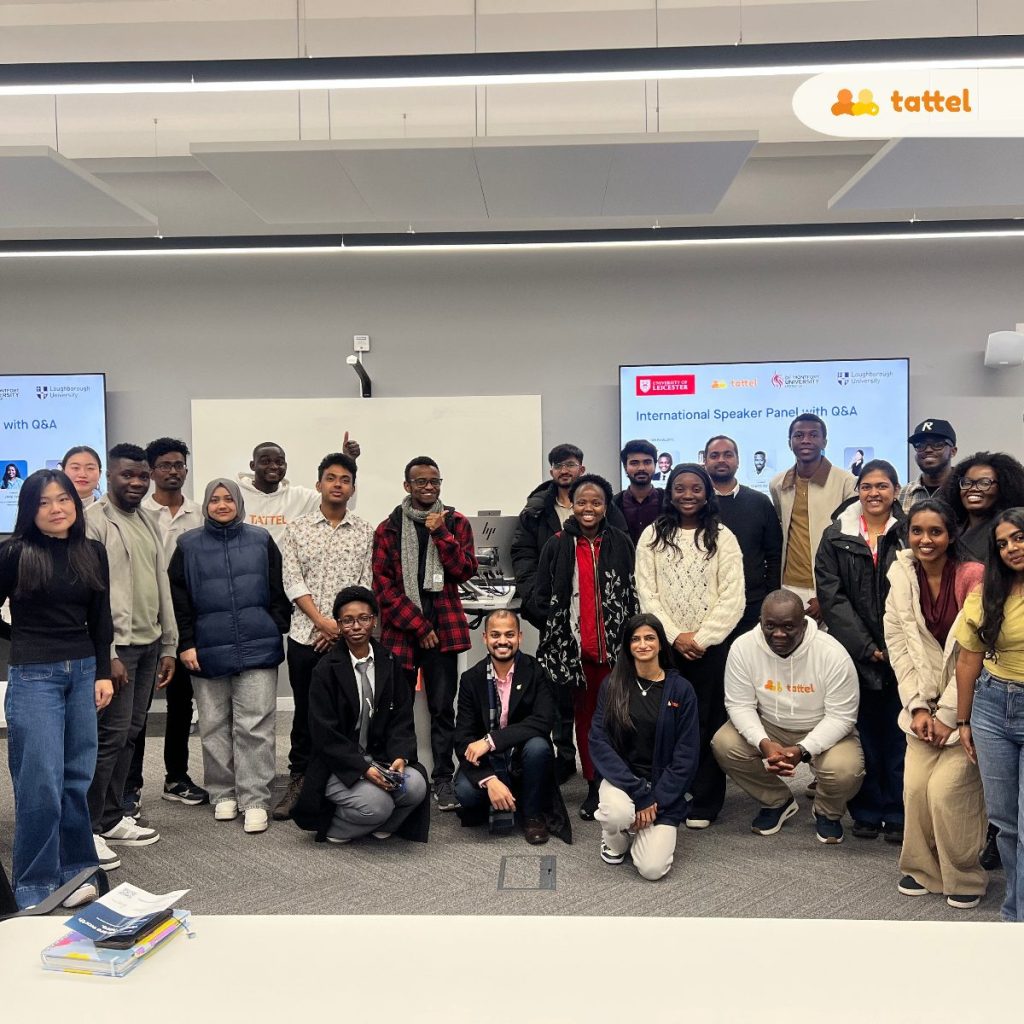
Four years, three universities, one question
This is an annual event for TATTEL. Loughborough University has been with us from the very beginning, and we held our first two events there. Last year we were at De Montfort University. This year, the University of Leicester hosted us.
The question has never changed. How does an international student go from being a student in the UK to being a professional in the UK?
I care about this question personally. I came to this country as an international student myself. I know the feeling of sending out application after application and wondering whether anyone is even reading them. I know how lonely that season can be.
The afternoon
We started with an icebreaker quiz, because nobody networks well when they are still nervous.
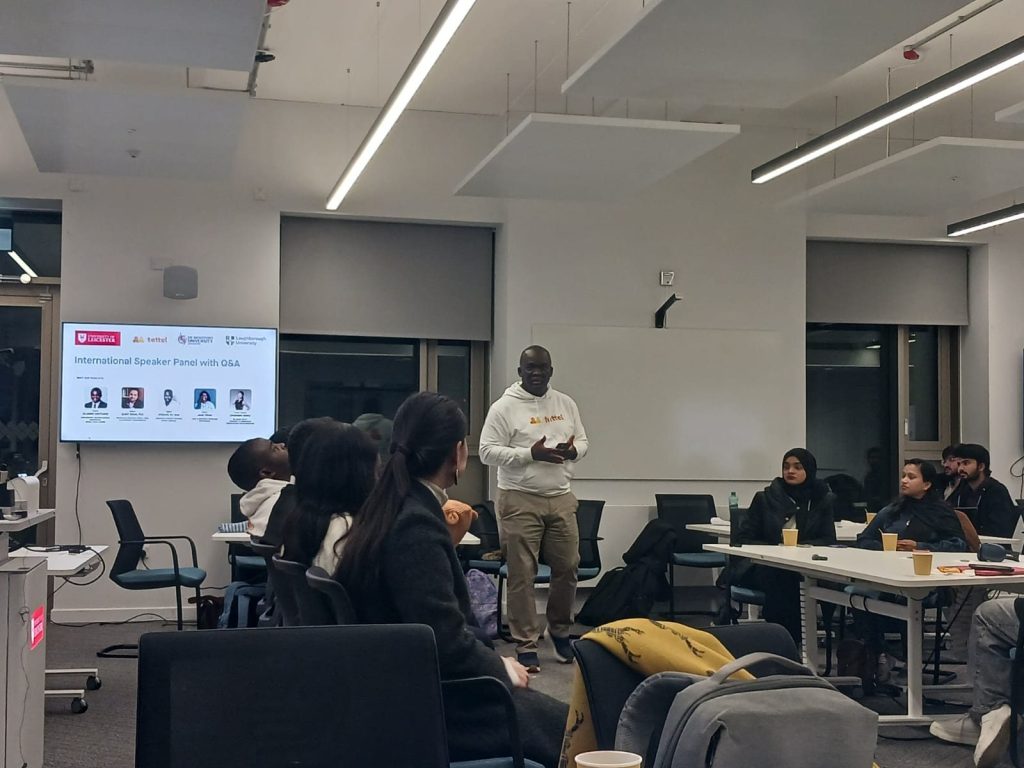
Our keynote speaker was Chuanzhi Xiong, who completed an MA in Social Policy at the University of Birmingham. As a former international student, she did a few internships and leaned on her university careers office along the way. I asked her to talk about that specifically, because so many students never walk through the door of their own careers service. Her message was simple: the support is there, so use it.
Then came the panel. Olumide Odetunde, data scientist and global talent adviser. Dr Sumit Singh, technology strategist working on digital twins and AI. Ifedayo “D1” Ojo, industrial and product designer and a Loughborough graduate. Jane Twum, a legal and corporate operations professional. Funke, who also shared her own journey with the students. And Dr Yunci Cai from the University of Leicester, who said yes at very short notice when we needed her. Most of them had once been international students themselves, sitting exactly where those students are now.
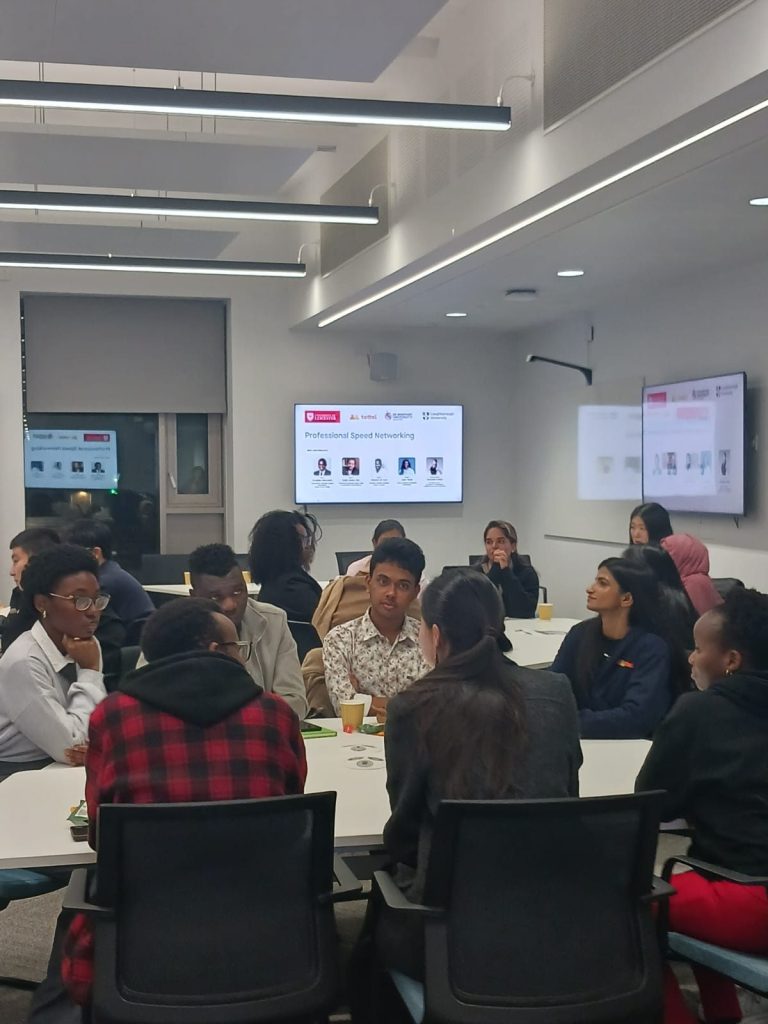
We finished with speed networking. Students moved around the room, sat with each speaker in small groups and asked their own questions. The room was full of conversation, and when we read the feedback, this was the part students valued most.
What the students told us
Every student who completed the feedback form said they would recommend the event to a friend. That is a Net Promoter Score of 100. On average, they rated their confidence in navigating the UK job market at 8.5 out of 10, and their confidence in networking with professionals at 8.8 out of 10.
The numbers are lovely, but the comments are what I keep coming back to.
“The panel was quite related to my experience as an international student and they had great advice to share with us.”
“You guys connect us with alumni which is very useful.”
“I feel like it gave me exposure to a lot of information I didn’t even know about. Networking was the best part.”
One student told us it was the best event tailored to international students she had ever attended. Another said how much it meant that we were doing this specifically with international students, not just for them.
What we will do differently
I believe in being honest about what did not go perfectly, because that is how the next one gets better.
More than 100 students registered, which tells me there is real demand for this kind of support. Turning registrations into attendance is our next challenge, and we will be working on it with our university partners.
Some students also told us the panel was too large, so it was hard to hear from everyone equally. They are right. It grew bigger than we planned. Next time, fewer voices and more depth. They also asked for more of the speed networking, so we will give it more time.
Thank you
An afternoon like this only happens because many people decide to make it happen.
I want to thank four people personally. Maxine Bodicoat-Brooks at the University of Leicester, Susan Boon and Sahar Tariq at Loughborough University, and Leena Dattani-Demirci at De Montfort University. Week after week, through emails, lecture shout-outs, newsletters and WhatsApp and WeChat messages, you kept pushing until registrations went from 26 to well over 100. Maxine, thank you for hosting us so warmly. Susan, thank you for standing with TATTEL from the very first year. Sahar, thank you for reaching out to Loughborough students so effectively and sharing the event with your international student teams. Leena, thank you for championing this with your students and for joining us on the day. Your commitment made this possible.
A special thank you to Anthony, Buchi and Naza, students at the University of Leicester, who worked so hard behind the scenes on the planning and made sure everything ran smoothly on the day. And to Fikunayomi, who came all the way from Hertfordshire because she believes in what TATTEL is doing. Thank you for your commitment and your support.
All four of them are international students themselves. They gave their time to make the road a little easier for other international students. That is exactly the spirit this event is about.
Thank you also to our speakers, who gave up an afternoon to give students something money cannot buy: honest experience. And to the TATTEL team, who made sure everyone found the room, found a seat and found someone to talk to.
What comes next
Next year, we are planning smaller, local speed networking events at Leicester and Loughborough, and we want to bring employers into the room, including employers who can sponsor visas. If that is you, or if your organisation would like to support international talent in the East Midlands, I would love to hear from you.
The work continues.
TATTEL supports international students in the UK on the journey from study to work. Find out more at tattel.co.uk.